Skip to content
Medika Rehab SentraPERKESO Rehab · Indonesia
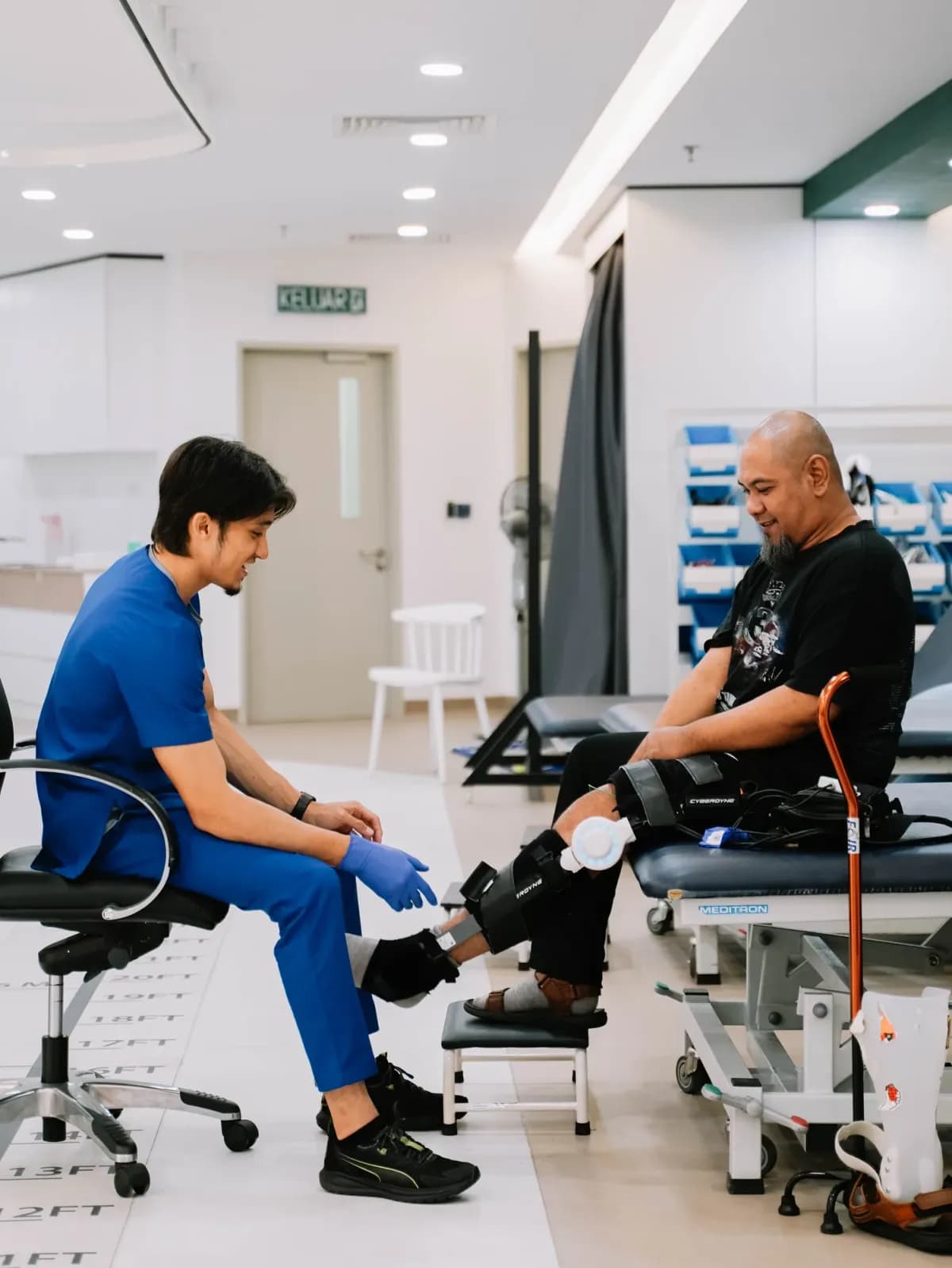
Therapist helping a patient train with a robotic leg device

Our Services

Neuro-Robotic & Cybernics Treatment

The largest cybernics treatment centre outside Japan, with 24 HAL® Robot Suits in partnership with Cyberdyne Inc.

HAL® technology

HAL® (Hybrid Assistive Limb), invented by Prof. Dr. Yoshiyuki Sankai, is a cyborg-type robot that reads bioelectric signals from the muscles through skin electrodes. These signals help the brain and body relearn walking movements.

HAL® treatment types

The PERKESO Rehabilitation Centres use three types of HAL®. All work on the same principle: they read the bioelectrical signals of the patient’s intention to move, then assist that movement.

HAL® Lower Limb

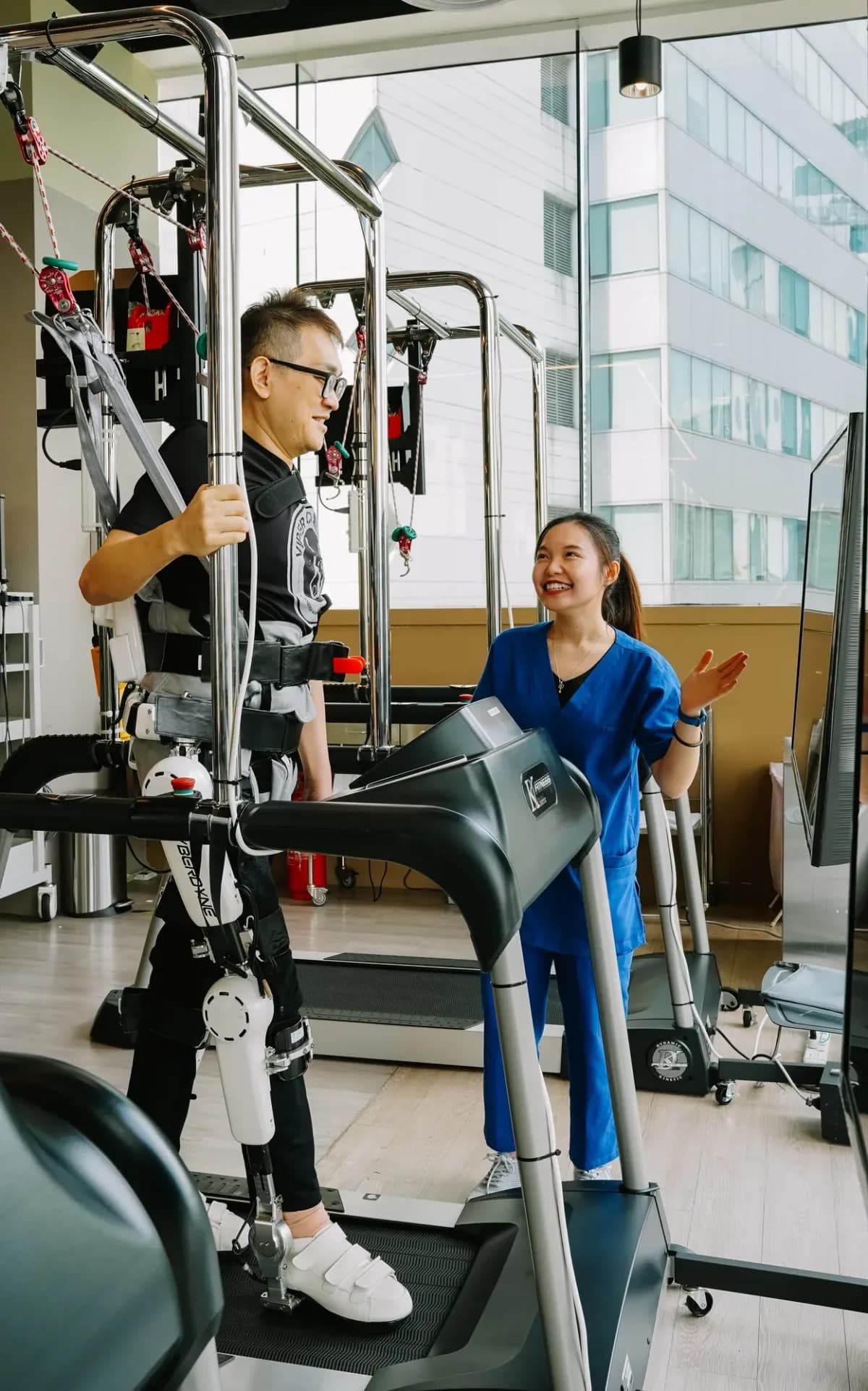
A robot worn on the waist and both legs for walking training. When the patient intends to take a step, skin electrodes pick up bioelectrical signals (BES) from the muscles. Together with joint-angle and foot-load sensors, these signals drive power units at the hip and knee joints, so the patient can practise a correct walking pattern again and again.
Demonstration video: Walking training with HAL® Lower Limb at the PERKESO Rehabilitation Centres: overground walking with a cane, then on a treadmill with body-weight support.
Patient practising walking on a treadmill with HAL® Lower Limb, supported by a therapist

Key specifications

  • Assists hip and knee joint movement
  • Sensors: bioelectrical electrodes, joint angle and foot load
  • Fits heights of about 150–190 cm; a children’s model covers 100–150 cm
  • Device weight about 13–14 kg; battery about 1 hour

How it is used

  1. 1The therapist assesses the patient and chooses the device size.
  2. 2Electrodes are placed on the skin over the hip and thigh muscles, then the robot is put on.
  3. 3The patient practises walking, usually on a treadmill with body-weight support or overground with a walking aid.
  4. 4The therapist monitors the signals and adjusts the level of assistance on the control screen.

Official manufacturer information: CYBERDYNE — HAL® Lower Limb

HAL® Single Joint

A lightweight HAL® unit for intensive training of a single joint. With interchangeable supports it attaches to the elbow, knee, ankle, shoulder or wrist. It reads bioelectrical signals and the joint angle, then assists bending and straightening as the patient intends.

HAL® Single Joint fitted to a patient’s elbow during arm training
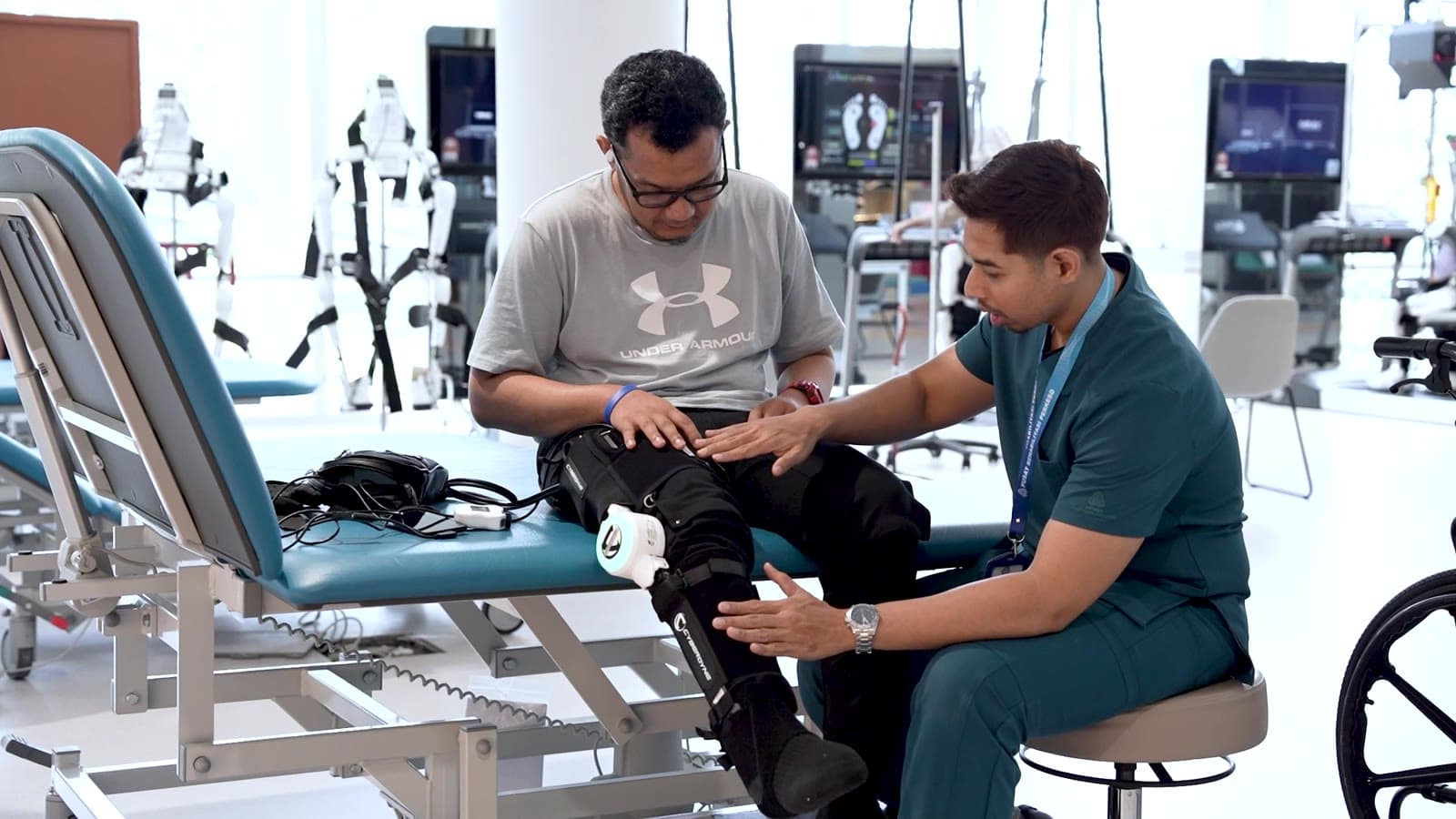
Therapist fitting HAL® Single Joint to a patient’s knee

Key specifications

  • Unit weight about 1.5 kg (without control unit and battery)
  • Range of motion from 0° (straight) to 120° (bent)
  • Battery about 120 minutes
  • For patients with muscle weakness or paralysis of the arms or legs

How it is used

  1. 1The therapist chooses the joint to train and fits the matching supports.
  2. 2Electrodes are placed on the muscles that bend and straighten that joint.
  3. 3The patient tries to bend and straighten the joint; HAL® assists each time the intention to move is detected.
  4. 4The exercise is repeated in sets, with assistance reduced step by step.

Official manufacturer information: CYBERDYNE — HAL® Single Joint

HAL® Lumbar

A HAL® unit worn around the waist to assist hip and lower-back movement. In hybrid mode it reads the bioelectrical signals of the intention to move; in autonomous mode it can be worn without electrodes and put on in about 10 seconds. It is used for sit-to-stand and bend-to-upright exercises and to reduce the load on the lower back.

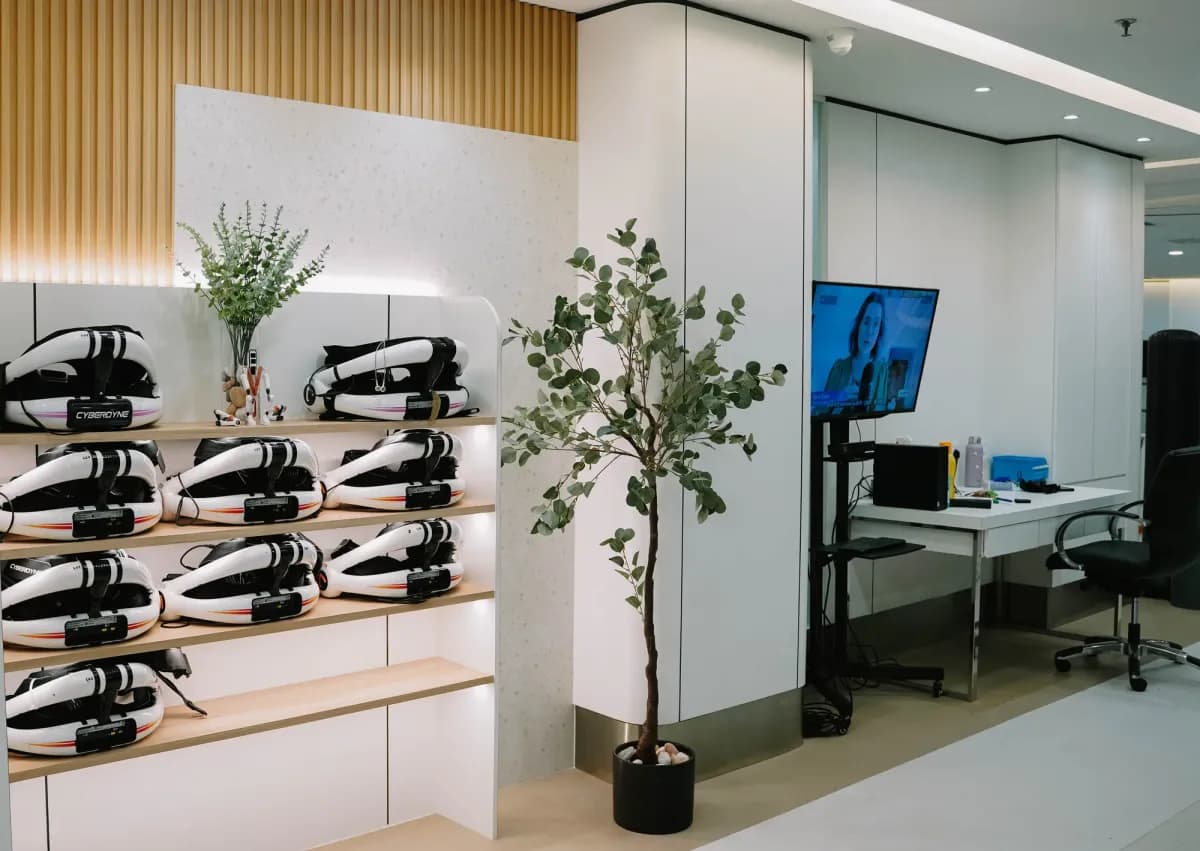
HAL® units ready for use at a PERKESO Rehabilitation Centre

Key specifications

  • Weight about 3.1 kg including battery
  • Assists hip extension up to 30° and flexion up to 130°
  • Hybrid mode (bioelectrical signals) and autonomous mode
  • Dust and splash resistant (IP54)

How it is used

  1. 1The therapist chooses the size (XS, S or M) and fastens the belt around the patient’s waist.
  2. 2In hybrid mode electrodes are placed on the muscles; autonomous mode needs no electrodes.
  3. 3The patient repeatedly practises standing up from sitting and bending to upright.
  4. 4The level of assistance is set to the patient’s ability and progress.

Official manufacturer information: CYBERDYNE — HAL® Lumbar

Conditions treated

  • Spinal cord injury
  • Stroke
  • Traumatic brain injury
  • Multiple sclerosis
  • Neurodegenerative disease
  • Paralysis or lower-limb weakness

Programme length

Typically 60–90 minutes per session, 3–5 days a week for 12 weeks, adjusted to each patient’s condition.